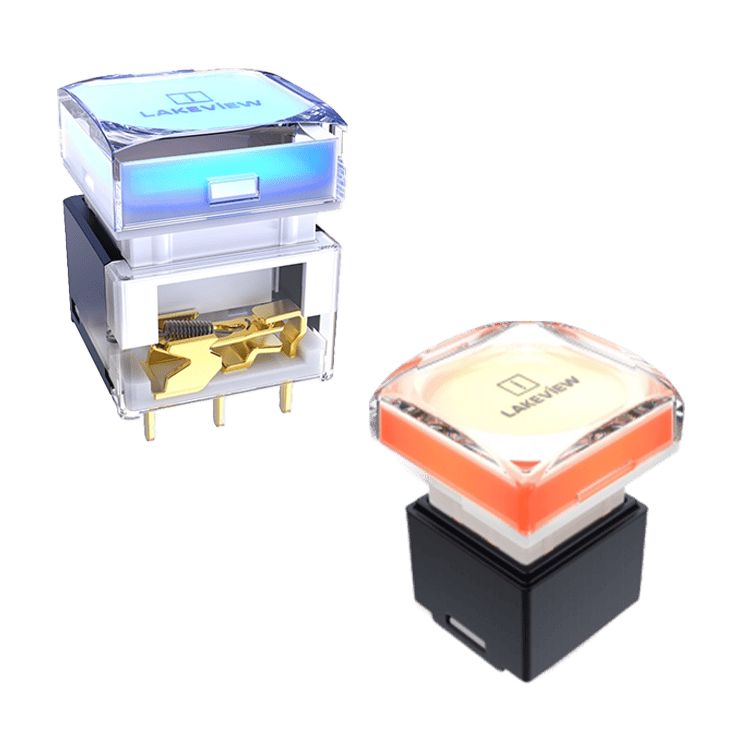
In today’s rapidly evolving technological landscape, LED pushbutton switches have become an essential component in various industries. From consumer electronics to industrial automation, these switches provide a reliable and user-friendly interface for controlling devices and systems. As the demand for LED pushbutton switches continues to grow, manufacturers are constantly striving to improve their functionality and performance.
One significant advancement in LED pushbutton switches is the introduction of addressable LED pushbutton switches. These innovative switches offer a range of benefits that make them a superior choice for many applications.
Features and Benefits
- The IC’s control circuit and the LED share the same power supply.
- The control circuit and RGB chip are integrated into a package of 3535 components, to form a complete external control pixel.
- Built-in signal reshaping circuit, any pixel receives the signal, and then re-export after waveform reshaping to ensure that the waveform distortion of the circuit will not accumulate.
- Built-in Power-on reset and Power-off reset circuits.
- The three primary colors of each pixel can achieve 256-level Grayscale, and to fulfill 16777216 colors full-color display, its scan frequency is higher than 2KHz.
- The reception and decoding of cascading data can be completed by a Serial Interface.
- Any two transmission distances not more than 3 Meters, without adding any circuit.
- When the refresh rate is 30fps, the cascade numbers are not less than 1024 pixels.
- Data transfer speeds up to 800Kbps.
- Highly brightness consistency.

Enhanced Control and Customization
Addressable LED pushbutton switches allow for individual control of each LED within the switch. This means that each LED can be programmed to display a specific color, intensity, or pattern, providing enhanced control and customization options. Whether it’s indicating the status of different functions or creating visually appealing user interfaces, addressable LED pushbutton switches offer unparalleled flexibility.
Improved Efficiency and Energy Savings
Addressable LED pushbutton switches are designed with energy efficiency in mind. By individually controlling each LED, these switches can optimize power consumption by only illuminating the necessary LEDs at any given time. This not only reduces energy consumption but also extends the lifespan of the LEDs, resulting in cost savings and reduced maintenance requirements.
Seamless Integration and Compatibility
Addressable LED pushbutton switches are designed to seamlessly integrate with existing systems and protocols. They are available in various sizes, form factors, and mounting options, making them compatible with a wide range of applications. Whether it’s a consumer electronics device, a medical instrument, or an industrial control panel, addressable LED pushbutton switches can be easily incorporated into the design without major modifications.
Reliability and Durability
Addressable LED pushbutton switches are built to withstand the rigors of demanding environments. They are often constructed with high-quality materials and undergo rigorous testing to ensure long-term reliability and durability. These switches are designed to withstand millions of actuations, making them suitable for applications that require frequent and repetitive use.
Conclusion
Addressable LED pushbutton switches represent a significant advancement in the field of LED pushbutton switches. With their enhanced control and customization options, improved efficiency and energy savings, seamless integration and compatibility, as well as reliability and durability, these switches offer a superior solution for a wide range of applications.
Whether you’re designing a cutting-edge consumer electronics device or an industrial control panel, consider incorporating addressable LED pushbutton switches to elevate the functionality and user experience of your product.
Our PLB series, PLC series, TL1 series, TL3 series, and TL13 series are now compatible with addressable LEDs. We welcome your inquiries.